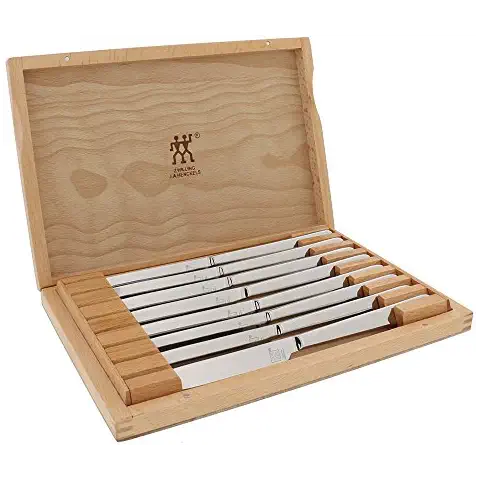
Buyer's Guide: Best Steak Knives for Your Home
Introduction
When it comes to choosing steak knives, there's a lot to consider. From the material the knife is made of, to the shape and size of the blade, to the type of handle, there are many factors that can affect your decision. In this article, we'll explore some of the key things to consider when choosing the right steak knives for your needs.
Material
One of the most important things to consider when choosing steak knives is the material they are made of. The two most common materials used in steak knife blades are stainless steel and carbon steel.
Stainless steel is a popular choice because it is resistant to rust and staining, and it is relatively easy to sharpen. However, it is not as hard as carbon steel, so it may not hold its edge as well over time.
Carbon steel, on the other hand, is harder than stainless steel and can hold its edge for a longer period of time. However, it is more susceptible to rust and staining, so it requires more care and maintenance.
Blade Shape and Size
The shape and size of the blade are also important considerations when choosing steak knives. The blade should be sharp and strong, with a pointed tip for piercing the meat, and a serrated edge for sawing through tough cuts of steak.
In terms of size, the blade should be long enough to easily slice through a thick steak, but not so long that it becomes unwieldy or difficult to handle. A blade that is around 4-6 inches in length is typically a good choice for most people.
Handle
The handle of the steak knife is another important consideration. It should be comfortable to hold and easy to grip, even when your hands are greasy or covered in steak juices.
The most common materials used for knife handles are wood, plastic, and metal. Wood handles are traditional and look nice, but they can be prone to cracking and splitting over time. Plastic handles are inexpensive and easy to clean, but they may not be as durable as other materials. Metal handles are strong and durable, but they can be heavy and may not be as comfortable to hold for long periods of time.
Conclusion
When choosing steak knives, it's important to consider the material the knife is made of, the shape and size of the blade, and the type of handle. Stainless steel and carbon steel are the most common materials used for knife blades, and a blade that is around 4-6 inches in length is typically a good choice. In terms of the handle, wood, plastic, and metal are the most common materials, and each has its own pros and cons. By considering all of these factors, you can find the right steak knives for your needs.
Frequently Asked Questions (FAQs)
1. Should steak knives be serrated or straight?
Steak knives with a straight edge are recommended as they create cleaner cuts with lower surface porosity. This helps to limit fluid loss and allows for slicing meat into thinner portions, providing a better dining experience.
2. What steak knives don't rust?
Stainless steel steak knives are a good choice as they are durable and rust-resistant. This ensures that the knives remain in good condition and last for a long time.
3. Can you sharpen serrated steak knives?
Yes, serrated steak knives can be sharpened using an electric sharpener. Carefully press each indentation of the serrated edge against different slots on the machine, moving it around in circles until they are all sharp again.
4. Do you sharpen both sides of a serrated knife?
When sharpening a serrated knife, you need to sharpen each beveled serration separately, one at a time. The flat side of the blade is not sharpened. You can use a sharpening rod, designed specifically for serrated knives, to sharpen each serration individually.
5. Are you supposed to sharpen steak knives?
While honing helps maintain a knife's condition, sharpening is necessary to restore damaged or dull blades. Sharpening removes metal and creates a new edge, improving the knife's performance and safety. Professional knife sharpening once a year is recommended, but you can also use a honing rod or leather strap to sharpen them at home.
6. Do I need to sharpen steak knives?
If your steak knives are not performing well, it is likely that they need sharpening. A sharp knife is safer and more efficient than a dull one. It is recommended to have your steak knives professionally sharpened once a year. Alternatively, you can use a honing rod or leather strap for sharpening at home.