Frequently Asked Questions (FAQs)
1. Are all motorcycle clutch levers the same?
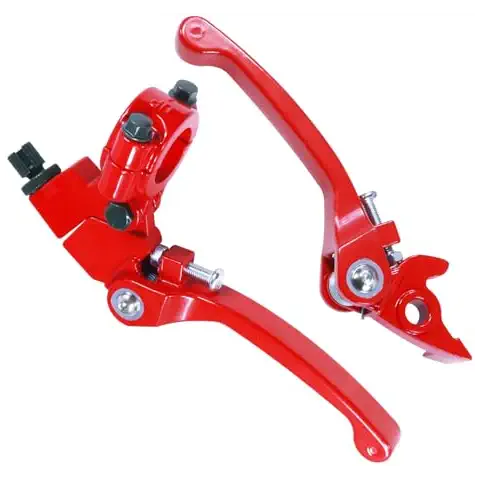
No, clutch levers are not the same for all motorcycles. While some bikes may have similar designs or levers that are identical across models of the same brand, they generally do not fit different manufacturers. It's important to choose the right clutch lever that is compatible with your specific motocross or enduro bike.
2. Why use a short clutch lever?
Short clutch levers offer several benefits, including a compact and sporty look, as well as a wider range of adjustability. Some riders prefer short levers for aesthetic reasons. However, others may find full-length levers more comfortable, as they provide an easier pull and allow for the use of all four fingers on the clutch.
3. What is the best position for a clutch lever?
The clutch lever should be positioned just under your fingers, without the need for reaching up or down and bending your wrist to operate it. To adjust the position, you can loosen the securing bolts or Allen keys and rotate the controls until they are in the desired position.
4. Do Supercross riders use the clutch?
Yes, Supercross riders use the clutch during most of the race. They use the clutch to keep the RPMs in the optimal range, especially in turns, ruts, and deep sections of the track. By using the clutch, riders can maintain momentum and have better control over their bikes.
5. Are short levers better?
Short levers can be more comfortable for riders who use only a couple of fingers to operate the clutch and brake. They prevent the end fingers from getting trapped between the back of the lever and the throttle grip, especially when wearing bulky gloves. However, the preference for short or stock levers may vary among riders.
6. How much freeplay should a clutch lever have?
The clutch lever should have a specific amount of freeplay, typically between 10 and 20 millimeters. This is usually measured from the end of the clutch lever to the grip. It's important to consult the owner's manual for your motorcycle, as it may provide the exact freeplay specification for your specific model.
7. Should the clutch go all the way to the floor?
No, the clutch pedal should not go all the way to the floor. It should offer resistance as you push it toward the floor but should stop before reaching the actual floorboard. When you depress the pedal, you should be able to change gears. If the clutch pedal goes all the way to the floor and you can't change gears, there may be an issue that needs to be addressed.