Frequently Asked Questions (FAQs)
1. What are the levels of precision?
There are four levels of measurement precision: nominal, ordinal, interval, and ratio. These levels represent increasing levels of precision in terms of the information provided by the measurement.
2. What is a precision level used for?
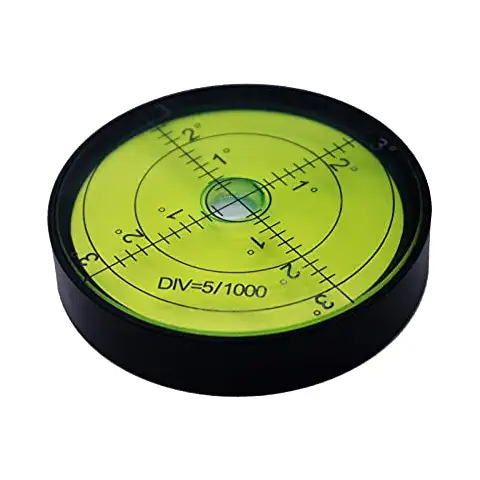
Precision levels, such as the 1:24000 level, are used to check the installation of precision machine tools in two axes. They ensure that the tools are aligned correctly, as any distortions in the frame due to an uneven base can cause machining errors.
3. What are the three levels of precision?
Precision can be considered at three levels: repeatability, intermediate precision, and reproducibility. These levels help assess the accuracy and consistency of measurements, and are typically investigated using homogeneous and authentic samples.
4. Is higher or lower precision better?
When it comes to precision, both high precision and high recall are desirable. However, there can be a trade-off between the two metrics in some cases. Precision measures the accuracy of positive predictions, while recall measures the completeness of positive predictions.
5. What is a good number for EDA response?
A normal EDA (Electrodermal Activity) response typically ranges from 1 to 20 microsiemens. The number of EDA responses can vary depending on the individual and the situation, but fewer responses usually indicate lower stress levels.
6. What is a normal EDA response?
A normal EDA (Electrodermal Activity) response in humans ranges from 1 to 20 microsiemens. EDA, along with heart rate and respiration, is commonly measured in polygraph tests and biofeedback studies to assess physiological responses.
7. How do you calculate precision level?
To calculate precision, you need the number of true positives and false positives. Precision is calculated as True Positives divided by the sum of True Positives and False Positives. For example, if there are 95 true positives and 55 false positives, the precision would be 95 / (95 + 55).
8. What is precision setting?
Precision setting refers to the specification of the number of digits after the decimal point for float and double numbers. The precision can be specified by using a period (.) and determines the level of detail in the output. If precision is not specified, the default setting in the computer is generally 6 digits.