Frequently Asked Questions (FAQs)
1. Can you replace electric stove top burners?
Yes, you can replace electric stove top burners. To replace a burner element, remove the broken one and discard it. Gently wiggle the ends of the new burner element into the socket as far as they will go. Push down from the top until the burner element sits flat. Finally, restore power to the stove.
2. What are the different types of electric stove burners?
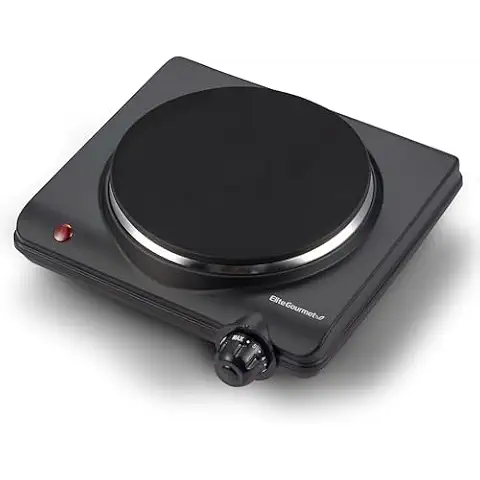
There are several types of electric stove burners. The main ones are ceramic and induction cooktops, which are widely available. Additionally, there are two cheaper options, namely radiant coil and solid hotplate burners. Radiant coil cooktops use a coil element to heat the cookware, while solid hotplate burners can be more difficult to clean.
3. What is the most energy efficient hotplate?
Induction stovetops are the most energy efficient option for cooking. Induction elements do not heat up themselves, but rather heat the cookware directly, resulting in efficient and precise cooking.
4. Which is better cast iron or infrared hot plate?
For serious cooks who require precise temperature control and even heat distribution, an infrared hot plate is preferable to a cast iron one. While cast iron plates are suitable for simple cooking tasks, infrared hot plates provide more precise temperature control and heat distribution.
5. Can a burner on a glass top stove be replaced?
Yes, a burner on a glass top stove can be replaced. To replace a radiant surface element (burner) on a typical glass top stove, you will need to get underneath the glass and remove the attached element. It is recommended to follow a step-by-step guide for this process.
6. Are all stove burners the same size?
No, stove burners come in different sizes. The size of the burner can vary from small to extra-large. The choice of burner size depends on the cooking style and the size of the cookware. Smaller burners are suitable for smaller cookware and precise, low flame cooking like simmering, while larger burners are best for larger cookware and tasks like boiling or faster cooking.
7. What are the three types of cooktops available in electric ranges?
The three types of cooktops available in electric ranges are gas, electric, and induction cooktops. Gas cooktops use an open flame, electric cooktops use a radiant, smooth top, and induction cooktops use electromagnetism and require specific, induction-compatible cookware.
8. Which cooktop uses less electricity?
Induction cooktops use less electricity compared to conventional electric stoves and gas stoves. They are approximately 5 to 10 percent more energy-efficient than conventional electric stoves and about three times more efficient than gas stoves.
9. Which is better ceramic or cast iron hot plate?
The main difference between ceramic and cast iron hot plates is their heating capabilities. Cast iron plates can maintain the set temperature for longer periods, while ceramic hot plates heat up more quickly to reach the set temperature.
10. What is the difference between electric and infrared burners?
The main difference between electric and infrared burners is the type of heat they produce. Infrared burners generate more radiant heat, similar to the heat energy produced by the sun. This results in different cooking results compared to open gas burners or electric heating elements.