Frequently Asked Questions (FAQs)
1. Can you put a digital speedometer in any car?
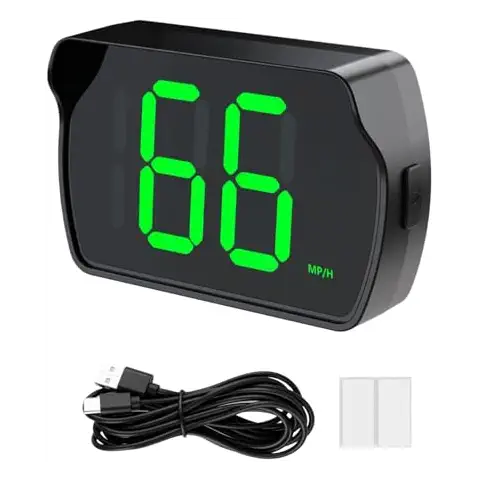
Yes, it is possible to install digital speedometers in almost any vehicle, not just cars. There are external devices available that can measure speed digitally and are compatible with most vehicles. These digital speedometers can be plugged into an auxiliary plug or a USB port to function.
2. How accurate are digital speedometers?
Digital speedometers are generally more accurate compared to traditional mechanical speedometers. They don't rely on a physical connection between the speedometer and the wheels, making them less susceptible to wear and tear. Additionally, digital speedometers are not affected by changes in tire size or gear ratios, enhancing their accuracy.
3. Are most car speedometers accurate?
According to regulations, speedometers must not underreport the vehicle's speed and should not overreport by more than 110% of the actual speed plus 6.25mph. So, while there may be a slight discrepancy, car speedometers are generally accurate within these limits to ensure the displayed speed is not significantly lower or higher than the actual speed.
4. Which is better, analog or digital speedometer?
Both digital and analog speedometers have their advantages. Digital speedometers are best for precise speed measurement and comparing the speed to a target. Analog speedometers are better at detecting dynamic speed changes. However, the differences between speedometers are reduced when using speed management systems that complement either type.
5. Is it legal to have a digital speedometer?
According to the law, a GPS system cannot be considered compliant with legal requirements even if it provides a speed indication. Therefore, a GPS speedometer is not considered legal. However, the legality of other digital speedometers may vary depending on local regulations. It's important to consult the specific laws in your area.
6. Can a digital speedometer be wrong?
Yes, digital speedometers can have some margin of error. In the United States, car speedometers may have an error of plus or minus 4 percent. This means that at lower speeds, the displayed speed can be slightly higher than the actual speed, while at higher speeds, the displayed speed can be up to 3 miles per hour slower than the actual speed.