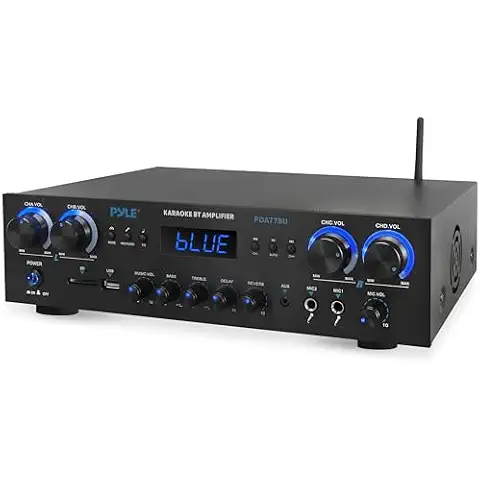
The Best Audio Component Amplifiers for Every Budget
Introduction to Audio Component Amplifiers
When it comes to creating the perfect home audio setup, choosing the right audio component amplifiers is crucial. These devices are responsible for boosting the signal from your audio source, such as a CD player or a turntable, and delivering it to your speakers. In other words, they are the "powerhouses" of your audio system, and a good amplifier can make a huge difference in the quality of the sound you hear.
Consider Your Audio Source
One of the first things to consider when choosing an audio component amplifier is the type of audio source you will be using. Different amplifiers are designed to work with different types of audio sources, so it's important to choose one that is compatible with your setup.
For example, if you plan on using a turntable as your audio source, you will need an amplifier that has a built-in phono preamp. This is because turntables produce a very weak signal that requires a special type of amplifier to boost it. On the other hand, if you plan on using a CD player or a streaming device as your audio source, you can choose an amplifier without a phono preamp, as these audio sources produce a stronger signal that does not require as much amplification.
Choose the Right Number of Channels
Another important factor to consider when choosing an audio component amplifier is the number of channels it has. Most amplifiers have either two channels (for stereo sound) or four channels (for surround sound). If you are only planning on using two speakers, a two-channel amplifier will suffice. However, if you want to create a more immersive listening experience with multiple speakers, a four-channel amplifier is a better choice.
Determine Your Power Needs
When it comes to amplifiers, power is everything. The more powerful an amplifier is, the louder and more dynamic your music will sound. However, it's important to strike a balance between power and efficiency. An amplifier that is too powerful for your speakers can damage them, and an amplifier that is too weak will not be able to drive your speakers to their full potential.
To determine the right amount of power for your amplifier, you will need to consider the size and type of your speakers, as well as the size of your listening space. A good rule of thumb is to choose an amplifier with a power output of at least 50 watts per channel for small to medium-sized speakers, and 100 watts per channel or more for larger speakers.
Choose a High-Quality Amplifier
When it comes to audio component amplifiers, the quality of the components used in their construction can make a big difference in the sound quality. Look for amplifiers that use high-quality components, such as large power supplies, high-quality capacitors, and high-quality transistors. These components will ensure that your amplifier delivers clean, powerful sound with minimal distortion.
Conclusion
Choosing the right audio component amplifier is an important decision that can greatly impact the sound quality of your home audio setup. By considering your audio source, the number of channels you need, your power requirements, and the quality of the components used in the amplifier, you can choose the perfect amplifier for your home audio system.
Frequently Asked Questions (FAQs)
1. What kind of amp do I need for component speakers?
For component speakers, a two-channel amplifier is recommended. These amplifiers can power two speakers or be bridged to provide more power for a single component speaker. Two-channel amplifiers are available in Class A and Class AB designs, with Class A offering clear and direct sound.
2. What components are needed to build an audio amplifier?
To build an audio amplifier, you will need components such as an NPN transistor, resistors (100-ohm and 10k ohm), capacitors (100uF and 0.1uF), and an 8-ohm speaker. These components are used to create a basic amplifier circuit.
3. What is the best type of amplifier for audio?
The best type of amplifier for audio depends on your requirements. Class A amplifiers offer high sound fidelity but are less efficient. Class B amplifiers are more efficient but have more distortion. Class AB amplifiers provide a balance of power efficiency and good sound. Class D amplifiers are highly efficient and compact.
4. What class amp is best for component speakers?
When it comes to component speakers, A/B amplifiers are generally recommended for good sound quality. Class D amplifiers, on the other hand, are better suited for driving subwoofers.
5. Why buy a mini amp?
Mini amps with lower wattage are recommended for better sound clarity at low volumes. They are favored by guitar experts because they produce better sound quality at lower volumes.
6. Are DIY amplifiers good?
DIY amplifiers can be good in terms of sound quality and low signal distortion levels, making them a popular choice. However, they may not be suitable for high-power amplification due to power loss and heat generation.
7. How to make a simple powerful amplifier?
To make a simple powerful amplifier, you will need main components like a MOSFET transistor, additional components, and proper assembly according to the circuit. Once the wiring is checked and a power source is connected, you can enjoy the result of your amplifier.
8. Do more powerful amplifiers sound better?
While it is true that more powerful amplifiers can play speakers louder and cleaner, small differences in power may not make a significant audible change.