
A dog that climbs into your lap, takes a deep breath, and falls asleep is probably looking for a comfortable place to be close to you. If your dog can also rest nearby or move away freely, lap time is usually fine when you both enjoy it. Pay closer attention if the behavior started suddenly, your dog seems unable to settle, or you see stiffening or growling when someone approaches.
Why does my dog lie on me?
The best clues are what happened just before your dog climbed up, what their body looks like, and what happens when you stop interacting or stand up.
| What you notice | What to do |
|---|---|
| Loose body, soft eyes, and an easy nap | Let them rest if you're comfortable, or offer a spot beside you. |
| Nudging or pawing, then settling when you pause | Give attention when your dog is calm. Offer a short play break if that's what they seem to want. |
| Pacing, panting, or trembling after a loud sound | Give your dog room and access to a quieter place. Ask your vet for help if the pattern keeps happening. |
| Freezing, hard staring, growling, or snapping as someone approaches | Stop the approach and give your dog space. Avoid reaching for their collar or lifting them. |
Company and familiar routines
Some dogs head for the same spot as soon as you sit down in the evening. Your lap can become part of a predictable routine. Watch whether they happily take the cushion next to you when your lap is occupied. That tells you more about what they want in the moment than trying to rank who's in charge.
A warm, comfortable place to rest
Your lap may simply be the warmest or softest spot within reach. If your dog only does this on the sofa or when the room is cool, try placing their usual blanket alongside you. See whether they choose it on their own.
A way to get your attention
If lying across you reliably gets a pat, a conversation, or a game, it makes sense for your dog to try it again. Look at what they do next. A dog who immediately brings a toy when you get up may have been looking for play. A dog who stays put with loose muscles may be ready for a nap.
A preference for close contact
Some dogs like a chin on your knee. Others like to be in the same room with a little space between you. If your dog approaches you for petting, pause after a few strokes. Let them decide whether to lean in again or move away.
Reassurance when something feels wrong
Watch what else is happening. Climbing onto you during a thunderstorm and trembling is different from settling down with you every evening. For separation-related distress, look at what happens when you leave. Repeated pacing, vocalizing, or attempts to escape while alone matter more than following you around while you're home. Cornell's canine behavior guidance explains how these patterns differ.
Is it okay to let my dog lie on me?
Yes, when your dog is relaxed and the contact works for both of you. It's also fine to keep your lap clear and invite your dog to lie beside you. Choose a rule everyone in the household can follow. If a large dog makes it difficult for someone to get up, or a child is too close to a resting dog, use separate resting spaces and supervise.
Give space if the behavior changes. If your dog stiffens or growls when touched, moved, or approached, stop the interaction and have others back away. Don't test the growl by reaching again. A dog can guard a person or a favorite resting spot, and discomfort can also change how they respond to touch. If you see repeated warnings, a snap, or a new change alongside limping, yelping, or trouble getting comfortable, contact your vet. See VCA's guide to canine body language and Cornell's guidance on guarding.
Three ways to help your dog settle beside you
Practice when your dog is comfortable and awake. If your dog has growled or snapped around the couch, get help from your vet before practicing close to that spot.
1. Set up a spot within reach
Start with a familiar blanket or a mat beside the couch. Pick a spot where your dog can stretch out without blocking a walkway. If your dog prefers thicker padding, try their existing bed or look for a dog bed that fits the space.
2. Reward the move to the mat
Practice before your dog has already settled on you. Reward them when they step onto the mat, then reward again when they choose to lie down. Deliver the treat on the mat while they're there. Start with a few seconds of calm, then gradually wait longer before the next reward. The American Veterinary Society of Animal Behavior recommends reward-based training.
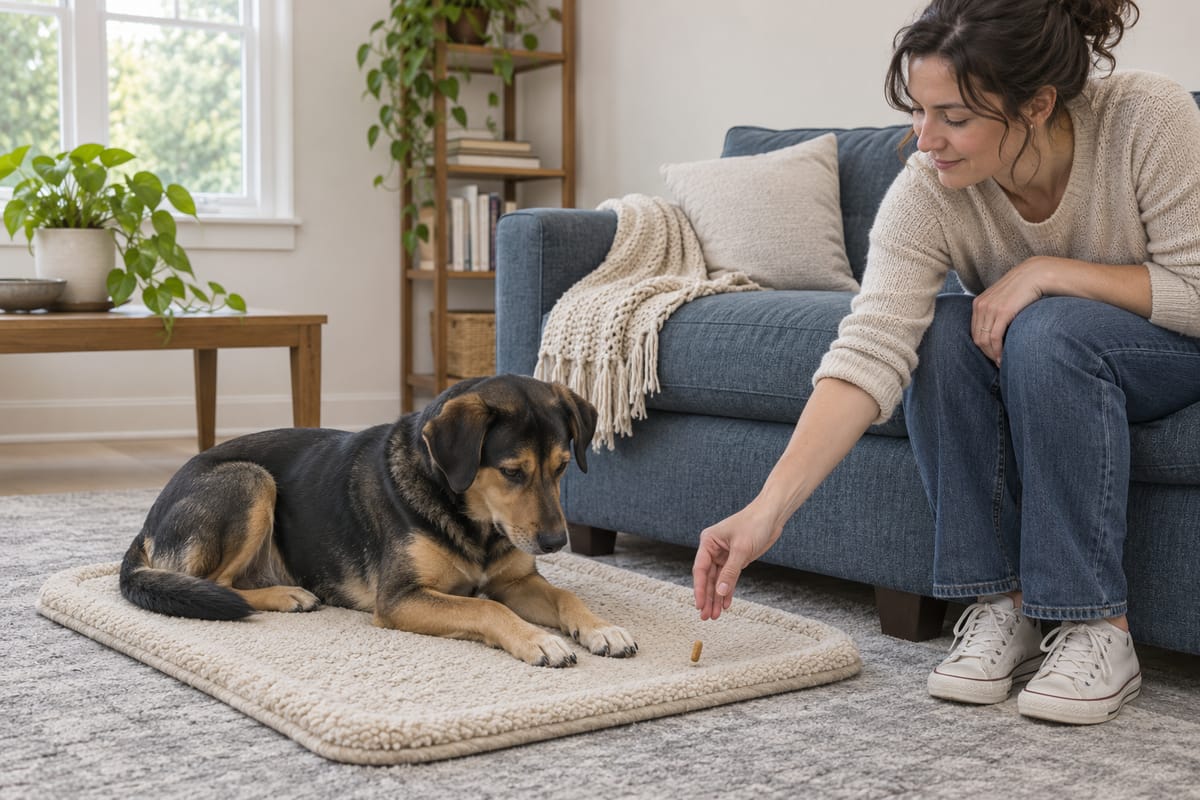
3. Give the same answer each time
If you want lap time by invitation, use a consistent cue to invite your dog up. When you want space, prompt them to move to the mat while they're awake and relaxed. Reward them after they get there. If you want a walkthrough, Dogs Trust demonstrates how to teach a settle.