
* We independently evaluate all recommended products and services. If you click on links we provide, we may receive compensation.
Redesigning a room doesn't have to mean gutting everything and starting over. Whether you're tired of staring at the same beige walls or you just moved into a place that needs some personality, a thoughtful refresh can transform a space without draining your bank account.
Here are seven practical steps to redesign any room on a budget — plus a few tools that make the planning process a lot easier.
1. Start With a Clear Vision (Before You Spend a Dollar)
The biggest budget killer in any room redesign is impulse buying. You see a lamp you love at HomeGoods, grab it, bring it home — and it clashes with everything.
Before you buy anything, decide on a direction. Ask yourself:
- What mood do I want this room to have? (Calm and cozy? Bright and energetic?)
- What's the one thing that bothers me most about the current setup?
- What pieces do I already own that I genuinely like?
Pro tip: If you struggle to picture how a new style would look in your existing space, try an AI room design tool like HomeRestyle. You upload a photo of your room, pick a style — mid-century modern, Japandi, coastal, whatever catches your eye — and it generates a realistic preview in seconds. It's a fast way to test directions before committing to any purchases.
2. Work With What You Have
You'd be surprised how much a room changes when you simply rearrange what's already in it. Pull furniture away from the walls. Swap pieces between rooms. Turn a bookshelf sideways to create a room divider.
A few rearrangement tricks that cost nothing:
- Float your sofa. Pushing everything against the walls makes a room feel like a waiting room. Pull the sofa forward even 12 inches and the room instantly feels more intentional.
- Swap nightstands. Use a small stool, a stack of vintage books, or a plant stand instead of a matching set. Asymmetry adds character.
- Rehome the clutter. Sometimes a room doesn't need new things — it needs fewer things. Box up anything that doesn't serve the new direction and donate or store it.
3. Paint One Wall (or Just the Trim)
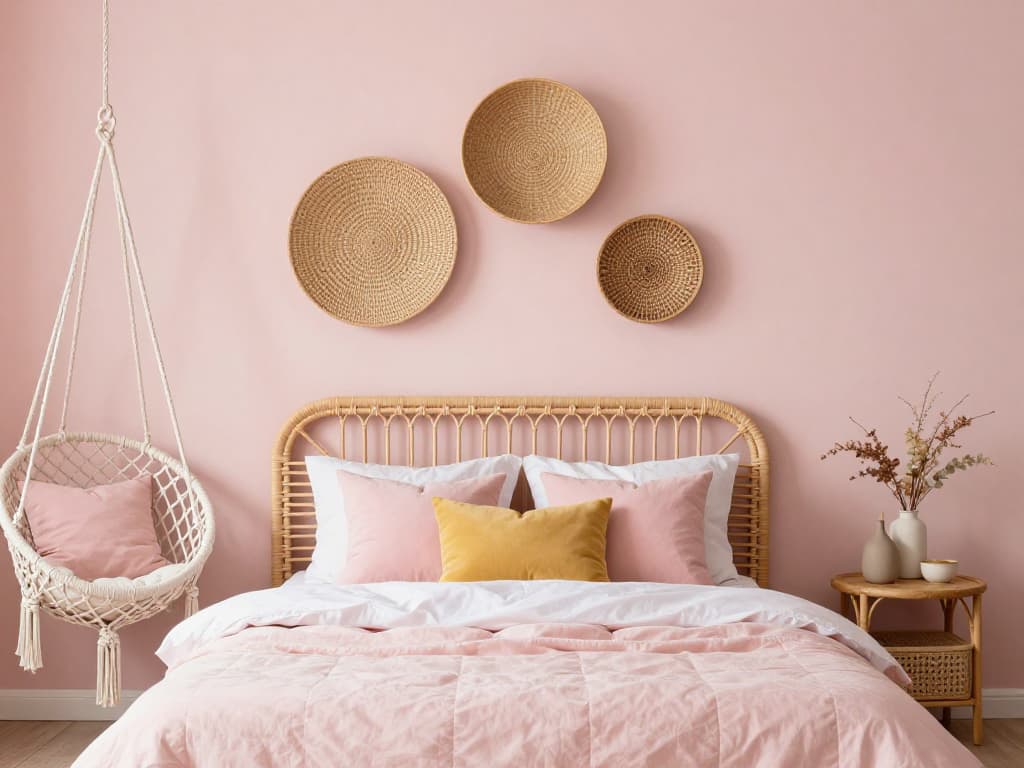
A full room paint job costs between $200 and $500 in materials if you DIY it. But you don't always need to paint every wall. An accent wall behind a bed or sofa creates a focal point for under $50 in paint.
If painting feels like too much commitment, try painting just the trim, door frames, or window casings in a contrasting color. Black trim on white walls, for example, gives a room an instant editorial quality.
Color selection tip: Test paint samples on the actual wall and observe them at different times of day. A color that looks perfect under store lighting can shift dramatically in your north-facing living room.
4. Upgrade Your Lighting
Lighting is the single most underrated element in room design. Most homes come with generic overhead fixtures that cast flat, unflattering light. Swapping or supplementing them makes a dramatic difference.
Budget-friendly lighting upgrades include:
- Replace the overhead shade or fixture. A $30–$60 pendant or drum shade from Amazon or IKEA can replace a builder-grade boob light and completely change the room's feel.
- Add a floor lamp. One tall arc lamp in a corner adds warmth and dimension. Place it behind a reading chair or next to a sofa.
- Use warm bulbs. Switch to 2700K warm white LED bulbs throughout the room. Cool white bulbs (4000K+) make residential spaces feel clinical.
- Layer your light sources. Aim for at least three light sources per room: overhead, task (a desk or table lamp), and ambient (a floor lamp or candle cluster).
5. Invest in Textiles, Not Furniture
New furniture is expensive. New textiles are not — and they can shift a room's entire personality.
Start with these high-impact, low-cost swaps:
- Throw pillows. Four new pillows in coordinated (not matching) fabrics can update a sofa for under $80. Mix textures: a velvet, a linen, and a patterned cotton.
- A new rug. If your room has hard floors, a well-sized area rug anchors everything. For budget options, check Rugs USA, IKEA, or even Costco for solid-quality finds under $150.
- Curtains. Swap short, thin curtains for floor-length panels hung close to the ceiling. This single trick makes any room feel taller and more polished. White linen panels are a reliable go-to.
- A throw blanket. Draped over an armchair or the end of a bed, a textured throw adds warmth for $20–$40.
6. Add Life (Literally)
Plants do something no amount of furniture rearranging or paint can do: they make a room feel alive.
You don't need a green thumb. Start with hard-to-kill varieties:
- Pothos — trails beautifully from a shelf, tolerates low light and irregular watering.
- Snake plant — sculptural, upright, nearly indestructible.
- ZZ plant — glossy leaves, thrives on neglect.
- Dried eucalyptus or pampas grass — if you truly cannot keep plants alive, quality dried arrangements still add organic texture.
Place plants at varying heights — one on the floor in a basket, one on a shelf, one trailing from a high surface — to create visual rhythm.
7. Edit, Step Back, and Edit Again
The final step in any room redesign is restraint. After you've made your changes, live with the room for a few days before adding anything else.
Walk into the room as if you're seeing it for the first time. Notice what draws your eye and what feels off. Often the answer isn't to add more — it's to remove one or two things that are competing for attention.
A well-designed room isn't about having the most expensive furniture or following every trend. It's about creating a space that feels intentional, comfortable, and genuinely yours.
The Bottom Line
Redesigning a room on a budget is less about finding cheap stuff and more about making smart, intentional choices. Start with a clear direction, work with what you already have, and spend selectively on the items that create the biggest visual impact — lighting, textiles, and a fresh coat of paint.
Happy redesigning.