






All You Need to Know About Buying Scroll Saw Blades
Introduction
If you're new to the world of scroll sawing, you might be wondering how to choose the right blades for your projects. Choosing the right blade can mean the difference between a smooth, clean cut and a jagged, rough one. In this article, we'll explore some key factors to consider when selecting scroll saw blades, and offer some tips and recommendations to help you make the best choice.
Types of Blades
One of the first things to consider when choosing scroll saw blades is the type of blade. There are two main types of blades: pin-end and plain-end. Pin-end blades have a small pin on one end that fits into the blade holder on your scroll saw, while plain-end blades do not have a pin and must be held in place using a blade clamp or other fastening device. Pin-end blades are generally easier to use, but plain-end blades can offer greater flexibility and control.
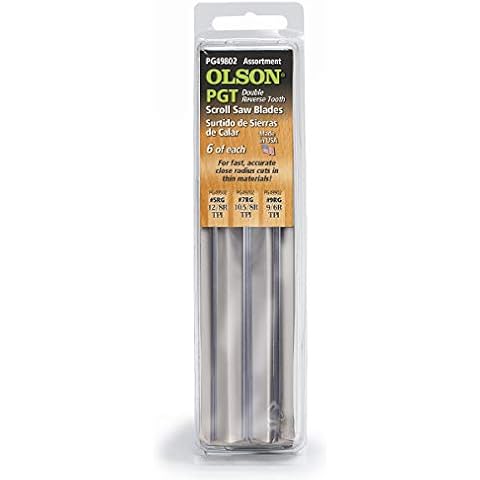
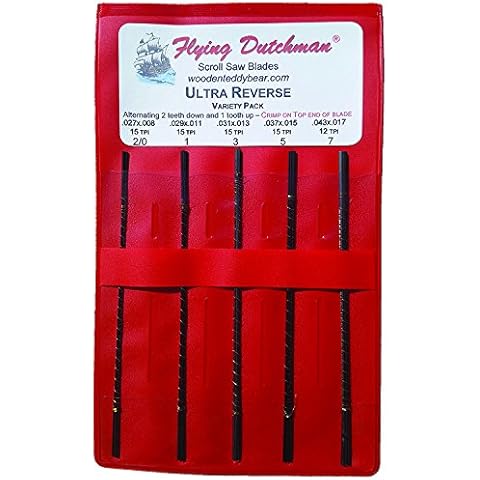
Another important factor to consider is the blade's tooth configuration. Scroll saw blades come in a variety of tooth configurations, each of which is designed for a specific type of cutting. For example, skip-tooth blades have fewer teeth per inch and are best for cutting thick materials, while double-tooth blades have twice as many teeth per inch and are ideal for cutting finer, more intricate patterns.
Choosing the Right Blade for Your Project
When choosing a scroll saw blade, it's important to consider the type of material you'll be cutting. Different blades are better suited for different materials, so it's important to choose a blade that's right for the job. For example, if you're cutting through thick hardwood, you'll want to choose a blade with a larger tooth pitch, such as a skip-tooth blade. If you're cutting through thin, delicate materials, such as veneer or inlay, you'll want to choose a blade with a finer tooth pitch, such as a double-tooth blade.
Another factor to consider is the thickness of the blade. Scroll saw blades come in a range of thicknesses, from ultra-thin to extra-thick. Thinner blades are better for making fine, detailed cuts, while thicker blades are better for cutting thicker materials or making longer cuts.
Tips and Recommendations
When it comes to choosing scroll saw blades, there are a few key tips and recommendations to keep in mind. First, it's always a good idea to have a variety of blade types and tooth configurations on hand, so you'll be prepared for any project that comes your way. This will allow you to select the right blade for the job and get the best possible results.
Another tip is to experiment with different blades to find the ones that work best for you. Each scroll saw and each material is different, so what works well for one person may not work as well for another. By trying out different blades, you'll be able to find the ones that give you the best results.
Finally, it's important to remember that scroll saw blades are consumables, which means they will wear out over time. It's important to regularly check your blades for signs of wear and replace them as needed to ensure that you're always getting the best possible performance from your scroll saw.
Conclusion
Choosing the right scroll saw blades can be a daunting task, but with a little knowledge and some experimentation, you can find the perfect blades for your projects. By considering the type of blade, the tooth configuration, the type of material you're cutting, and the thickness of the blade, you can ensure that you're always getting the best results from your scroll saw.