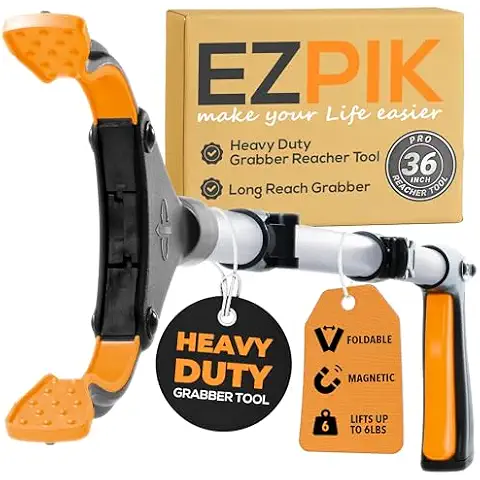
What to Look for in Reaching Aids
Introduction
When it comes to finding the right reaching aid, it can be overwhelming to choose from the myriad of options on the market. From grabbers to reachers, there are many different styles and designs to consider. In this article, we will provide some useful tips on how to choose the right reaching aid for your needs.
Consider Your Specific Needs
The first thing to consider when choosing a reaching aid is your specific needs. Do you need a reaching aid to help you pick up objects from the floor, or do you need one to help you reach items on high shelves? Are you looking for a lightweight and portable option, or do you need a more heavy-duty reaching aid?
Once you have a clear idea of your needs, you can begin to narrow down your options and choose a reaching aid that is tailored to your specific needs.
Research Different Brands and Models
After you have determined your specific needs, the next step is to research different brands and models of reaching aids. This will help you to compare the features and benefits of each reaching aid and choose the one that is the best fit for you.
One way to research reaching aids is to read online reviews from other customers who have used the products. This can provide valuable insight into the performance and durability of different reaching aids. You can also consult with your healthcare provider or a rehabilitation specialist for recommendations on specific brands and models of reaching aids.
Consider the Weight and Length of the Reaching Aid
The weight and length of the reaching aid are important factors to consider when choosing the right one for your needs. A reaching aid that is too heavy or too long may be difficult to maneuver and use effectively. On the other hand, a reaching aid that is too lightweight or too short may not provide the reach and support that you need.
When comparing the weight and length of different reaching aids, consider your own strength and mobility. A heavier reaching aid may be more suitable for someone with strong arm muscles, while a lighter reaching aid may be more appropriate for someone with limited mobility. The length of the reaching aid should also be considered, as a longer reaching aid may provide greater reach but may be more difficult to control.
Choose a Reaching Aid with a Comfortable Grip
The grip of the reaching aid is an important factor to consider, as it can greatly affect your ability to use the tool effectively. A reaching aid with a comfortable grip will be easier to hold and maneuver, allowing you to pick up and retrieve objects more easily.
When choosing a reaching aid, consider the size and shape of the grip. The grip should be large enough to comfortably fit your hand, and the shape should be ergonomic and contoured to fit the natural shape of your hand. Some reaching aids also have padded grips or other features to improve comfort and reduce hand fatigue.
Conclusion
In conclusion, choosing the right reaching aid requires careful consideration of your specific needs, research into different brands and models, and consideration of the weight, length, and grip of the reaching aid. By following these tips, you can choose a reaching aid that is the best fit for your needs and will help you to pick up and retrieve objects more easily and effectively.
Frequently Asked Questions (FAQs)
1. What are grabbers used for?
Grabbers are handheld tools designed to assist in reaching and picking up items. They have a mechanical mechanism that allows the user to control and grip objects. These tools are commonly used for grabbing and retrieving objects that are out of reach or difficult to access.
2. Who uses grabbers?
Grabbers are beneficial for individuals who have difficulty bending down or reaching small items on high or overhead shelves. They are particularly useful for those with limited mobility or hand strength, allowing them to independently retrieve objects without straining or exerting themselves.
3. Why do people use grabbers?
People use grabbers to overcome challenges in reaching and picking up objects. By using grabbers, individuals with limited mobility or hand strength can maintain their independence and perform tasks that would otherwise be difficult or impossible. Grabbers provide assistance in daily activities and enhance accessibility for those who need it.
4. How much weight can a grabber lift?
The weight capacity of a grabber depends on its design and construction. Most grabbers are made of lightweight aluminum and weigh between 9 and 13 ounces. Lighter-duty grabbers can typically handle up to 5 pounds, while heavy-duty grabbers have a higher weight limit of up to 12 pounds. It's important to consider the weight capacity of a grabber based on the intended use and the objects being lifted.