Frequently Asked Questions (FAQs)
1. What are the 4 types of fuel gauges?
There are four general types of fuel gauges: sight glass, mechanical, electrical, and electronic. The type of fuel gauge used depends on the size of the aircraft and the number and location of the fuel tanks.
2. How accurate are digital fuel gauges?
Digital fuel gauges are generally accurate, with an average error of 2.3% compared to the fuel economy measured by a dynamometer. However, the accuracy can vary for each vehicle, ranging from -6.4% to 2.8%.
3. What is between 1/2 and 3/4 on a fuel gauge?
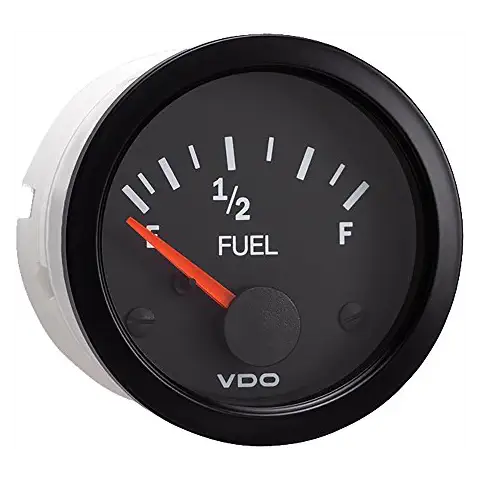
The lines on a gas gauge represent increments of 1/4, indicating the fuel level in the tank. If the needle is between 1/2 and 3/4, it means the tank is approximately 5/8 full.
4. How do I know if my fuel gauge is accurate?
There are a few signs that your fuel gauge may not be accurate, such as inconsistent readings, reading low when the tank is full, reading full when the tank is empty, or a false low fuel light. If you notice these issues, it may be worth checking or calibrating your fuel gauge.
5. How does a magnetic fuel gauge work?
A magnetic fuel gauge works by using a magnet to lock onto the position of the float inside the gauge chamber. As the float moves with the fuel level, the magnet provides an accurate real-time indication of the liquid level inside the tank.
6. Are digital gauges better?
Digital gauges are generally considered better than analog gauges due to their higher level of accuracy and precision. They provide readings with greater accuracy, often displaying pressure values up to the decimal point.
7. What does 3/8 on a fuel gauge mean?
When the fuel gauge indicates 3/8, it means the tank is approximately 37.5% full. The fraction is used to express the fuel level in relation to a full tank. Alternatively, you could say that the tank is 5/8 empty.
8. Why is my aftermarket fuel gauge not reading correctly?
The most common reason for an aftermarket fuel gauge to read incorrectly is a faulty fuel sending unit. The fuel sending unit measures the amount of fuel in the tank and communicates the fuel level to the gauge on the dashboard. If the sending unit is faulty, it can result in inaccurate readings on the fuel gauge.