Best Nuclear Weapons & Warfare History Books of 2026

* We independently evaluate all recommended products and services. If you click on links we provide, we may receive compensation.
These books offer a comprehensive look at the history of nuclear weapons and warfare. They provide a deep understanding of the science behind nuclear weapons, as well as the political and military strategies that have shaped their development and use. From the first atomic bomb to the complex nuclear arsenals of today, these books explore the impact of nuclear weapons on global politics and the devastating consequences of their use. Whether you are a history buff or just looking to deepen your knowledge of this important topic, these books are an essential resource for anyone interested in nuclear weapons and warfare.
At a Glance: Our Top Picks
 #TOP 1
 9.8
9.8
 #TOP 2
9.7
#TOP 2
9.7
 #TOP 3
9.5
#TOP 3
9.5
Top 10 Nuclear Weapons & Warfare History Books
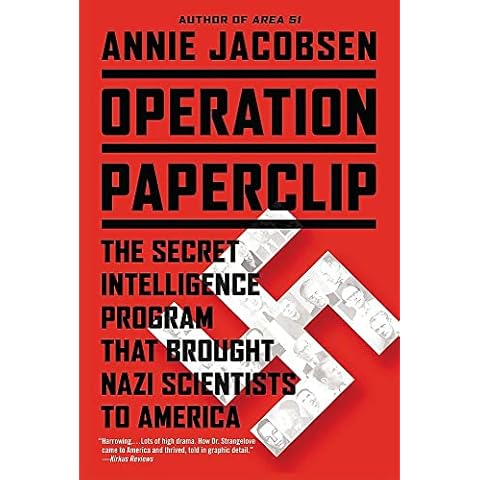
Operation Paperclip: The Secret Intelligence Program that Brought Nazi Scientists to America
Operation Paperclip is a gripping account of the U.S. government's covert project to bring Nazi scientists to America after World War II. Annie Jacobsen's book sheds light on how the Third Reich's scientific minds were responsible for major advances in rocketry, medical treatments, and the U.S. space program. Through exclusive interviews with Paperclip family members, colleagues, and interrogators, Jacobsen follows over a dozen German scientists and uncovers the government's disturbing secrets. This book is important, superbly written, and provides hard evidence to explore the moral outrage of Operation Paperclip in the name of national security.
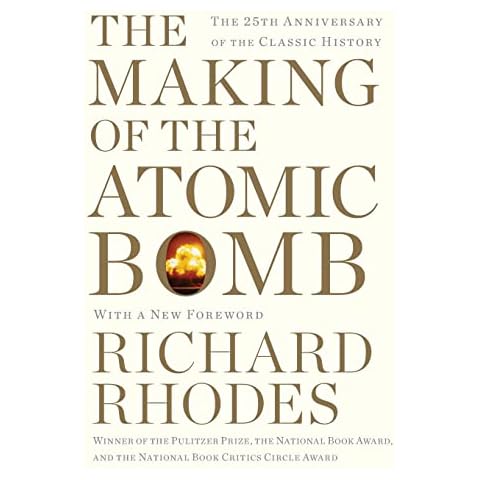
The Making of the Atomic Bomb
The Making of the Atomic Bomb by Richard Rhodes is a Pulitzer Prize-winning book that details the science, the people, and the sociopolitical realities that led to the development of the atomic bomb. The book covers the discovery of nuclear energy in the 19th century to the dropping of the first bombs on Japan during World War Two. The author introduces the players in this saga of physics, politics, and human psychology, making it a character-driven suspense novel. The book is a thought-provoking and masterful work that provides a panoramic backdrop of the events that changed the course of human history.
The Official U.S. Army Survival Manual Updated
The Official U.S. Army Survival Manual Updated is an essential guide for military personnel and outdoor enthusiasts. This comprehensive edition covers topics such as psychology, basic medicine, personal camouflage, and signaling techniques. It also includes a guide to identifying poisonous snakes, edible plants, and cloud formations for weather prediction. The book is thoroughly revised by Colonel Peter T. Underwood USMC (Ret) and issued by the Department of the Army. With detailed photographs and illustrations and an extensive set of appendices, this book is the ultimate survival guide for all conditions and environments.
Nuclear War Survival Skills: Lifesaving Nuclear Facts and Self-Help Instructions

Nuclear War Survival Skills is an updated edition of Cresson H. Kearny's iconic book, providing expert advice for surviving a nuclear attack. The book contains practical instructions and preventative measures based on years of meticulous scientific research. It includes tips for maintaining an adequate food and water supply, shelter sanitation, and preventive medicine. The book also features a foreword by physicist Dr. Edward Teller and an introduction by ex-Navy SEAL and New York Times bestselling author Don Mann. In today's dangerous age, Nuclear War Survival Skills is a relevant and essential guide for ensuring your family's safety in the worst-case scenario.
Area 51: An Uncensored History of America's Top Secret Military Base

"Area 51: An Uncensored History of America's Top Secret Military Base" by Annie Jacobsen is a gripping and fascinating account of the world's most famous military installation that has never been acknowledged by the U.S. government. With unprecedented access to military personnel, scientists, pilots, and engineers linked to the base, Jacobsen weaves together a compelling narrative of the mysterious activities that have taken place there, from nuclear weapons testing to pursuing the War on Terror. This book is the first to be based on interviews with eyewitnesses to Area 51 history, making it a seminal work on the subject. This is a must-read for anyone interested in the history of Area 51 and the secrets it holds."
Hiroshima

Hiroshima by John Hersey is a journalistic masterpiece that explores the aftermath of the first atomic bomb dropped on a city. Through the memories of survivors, the book offers a timeless and compassionate document that stirs the conscience of humanity. The author's account of his return to Hiroshima, almost four decades after the original publication, adds an eloquent and moving final chapter to this classic work. The book is a must-read for anyone interested in Japanese history and the devastating effects of war.
Killing the Rising Sun: How America Vanquished World War II Japan (Bill O'Reilly's Killing Series)

The Killing Series by Bill O'Reilly and Martin Dugard presents Killing the Rising Sun, a powerful and gripping book about the final moments of World War II in the Pacific. The book takes readers on a journey to the bloody battlefields of Peleliu and Iwo Jima, the embattled Philippines, and Los Alamos, New Mexico, where Dr. J. Robert Oppenheimer and his team of scientists are preparing to test the deadliest weapon known to mankind. This epic saga details the final moments of the war, including the most important political decision in history: whether to use the atomic bomb. Overall, this book is a must-read for anyone interested in history and the events that led to the end of World War II.
The Pentagon's Brain: An Uncensored History of DARPA, America's Top-Secret Military Research Agency

The Pentagon's Brain: An Uncensored History of DARPA, America's Top-Secret Military Research Agency by Annie Jacobsen is a Pulitzer Prize finalist that offers a comprehensive history of the Defense Advanced Research Project Agency (DARPA), the US government's most secretive military research agency. Jacobsen draws on exclusive interviews, private documents, and declassified memos to provide a fascinating and often chilling account of DARPA's Cold War origins to the present day. This book is a must-read for anyone interested in the intersection of science and the military-industrial complex.
U.S. Armed Forces Nuclear, Biological And Chemical Survival Manual

The U.S. Armed Forces Nuclear, Biological And Chemical Survival Manual is a comprehensive guide that teaches readers how to survive an attack on American soil, covering everything from North Korean missiles to weaponized smallpox. The book contains the best practices of all the United States' military services, adapted for the first time for civilian use. The authors provide useful information on how to protect oneself during a chemical or biological attack, recognize the indicators of nuclear, chemical and biological attack, and develop a simple and effective family action plan. This book is an essential tool for anyone concerned about the threats posed by terrorists and enemy nations.
Makers of Modern Strategy from Machiavelli to the Nuclear Age

Makers of Modern Strategy from Machiavelli to the Nuclear Age is a reference volume that analyzes the theory and practice of war over the past five centuries. The book covers a range of topics, from major theorists and political and military leaders to impersonal forces. With contributions from leading military historians, this updated edition provides a reinterpretation and illumination of war. The book is a work of general history as much as a history of the theory and practice of war. Overall, it is an outstanding resource for those interested in military strategy and history.

Frequently Asked Questions (FAQs)
1. Has a nuclear weapon ever been used in war?
The dangers from such weapons arise from their very existence. Although nuclear weapons have only been used twice in warfare—in the bombings of Hiroshima and Nagasaki in 1945—about 13,400 reportedly remain in our world today and there have been over 2,000 nuclear tests conducted to date.
2. Which war saw the first use of nuclear weapons?
Scientists first developed nuclear weapons technology during World War II. Atomic bombs have been used only twice in war—both times by the United States against Japan at the end of World War II, in Hiroshima and Nagasaki.
3. What is the most powerful nuclear weapon ever created?
Tsar Bomba On Oct. 30, 1961, the Soviet Union dropped the most powerful nuclear weapon ever exploded on the archipelago of Novaya Zemlya, north of the arctic circle.
4. Which are the 5 nuclear weapon powers?
The nuclear-weapon states (NWS) are the five states—China, France, Russia, United Kingdom, and the United States—officially recognized as possessing nuclear weapons by the NPT.
During our nuclear weapons & warfare history book research, we found 1,000+ nuclear weapons & warfare history book products and shortlisted 10 quality products. We collected and analyzed 84,495 customer reviews through our big data system to write the nuclear weapons & warfare history books list. We found that most customers choose nuclear weapons & warfare history books with an average price of $13.79.
Wilson Cook is a talented writer who has an MFA in creative writing from Williams College and has published more than 50 books acquired by hundreds of thousands of people from various countries by now. He is an inveterate reading lover as he has read a vast amount of books since childhood.