Frequently Asked Questions (FAQs)
1. What are the different types of car relays?
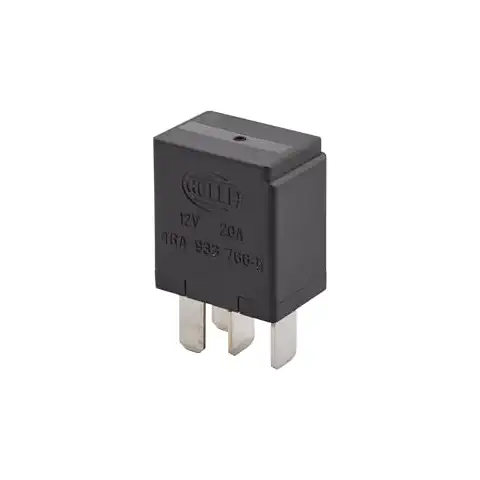
There are several types of car relays, including changeover relays, normally open relays, potted relays, flasher relays (such as thermal, electro-mechanical, LED, and wig-wag flashers), among others. Each type of relay serves a specific purpose in the car's electrical system.
2. What are the two major types of relays used in automotive electrical systems?
The two major types of relays used in automotive electrical systems are electromechanical relays and solid-state relays. Electromechanical relays are the most common type and are known for their characteristic clicking sound.
3. What is the most common automotive relay?
The most common automotive relays are make & break relays (Single Pole Single Throw - SPST) and changeover relays (Single Pole Double Throw - SPDT). These relays are widely used in automotive applications.
4. What are the most common signs and symptoms of a bad relay?
Some common signs of a bad relay include the vehicle not starting, the start relay remaining open after the engine is started, the starter making a clicking sound, and the vehicle starting intermittently. These symptoms indicate that the relay may need to be replaced.
5. What happens when a relay goes bad?
When a relay goes bad, it can cut off power to the fuel pump and ignition system, resulting in a no-power and no-start condition for the vehicle.
6. What car circuits need relays?
Relays are used in various car circuits, but a common example is the operation of vehicle headlights. A changeover relay can switch between circuits to activate the full beam or dipped beam as required. Another example is the car air-conditioning system.
7. What are the three main types of relays?
The three main types of relays are electromechanical relays, solid-state relays, and reed relays. Each type has its own characteristics and applications.
8. How many relays does a car have?
A typical car can contain up to twenty automotive relays, and they can be located throughout the vehicle. The number of relays may vary depending on the specific car model and its electrical system.
9. Which relay works both AC and DC?
Solid-state relays (SSRs) are designed to switch both AC and DC using the output of an SCR, TRIAC, or switching transistor. This allows them to perform the switching function without mechanical contacts.
10. What relay would prevent a car from starting?
If the starter relay fails, it can prevent the car from starting. Damage to the starter relay is usually caused by a short circuit due to a poor power connection on the starter.